All CATHOLIC POPES1st Millennium
| |||||||
|---|---|---|---|---|---|---|---|
| # | Pontificate | Portrait | Name: | Place of birth |
Age at start Age at end | Notes | |
| 1 | 1 April 33 – 29 June 67 (34 years, 89 days) |  | St Peter |
Bethsaida, Galilea, Roman Empire | 32 / 66 | Apostle of Jesus from whom he received the keys of the Kingdom of Heaven, according to Matthew 16:18–19. Executed by crucifixion upside-down; Feast day (Feast of Saints Peter and Paul) 29 June, (Chair of Saint Peter) 22 February. He is recognized by the Catholic Church as the first Bishop of Rome appointed by Christ. Also revered as saint in Eastern Christianity, with a feast day of 29 June. | |
| 2 | 29 June 67 – 23 September 76 (9 years, 86 days) | 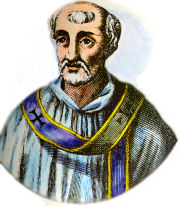 | St Linus | Volterra, Italia, Roman Empire | 57 / 66 | Feast day 23 September. Also revered as a saint in Eastern Christianity, with a feast day of 07 June. | |
| 3 | 23 September 76 – 26 April 88 (11 years, 216 days) |  | St Anacletus | Anacletus Athens, Greece, Roman Empire | 51 / 63 | Martyred; feast day 26 April. Once erroneously split into Cletus and Anacletus. | |
| 4 | 26 April 88 – 23 November 99 (11 years, 211 days) | 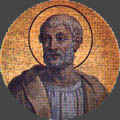 | St Clement I | Rome, Roman Empire | 53 / 64 | Feast day 23 November. Issued 1 Clement which is said to be the basis of apostolic authority for the clergy. Also revered as a saint in Eastern Christianity, with a feast day of 25 November. | |
| 5 | 23 November 99 - 27 October 107 (7 years, 338 days) |  | St Evaristus | Bethlehem, Judea, Roman Empire | 49 / 55 | Said to have divided Rome into parishes, assigning a priest to each. Feast day of 26 October. | |
Popes of the 2nd Century | |||||||
| 6 | 27 October 107 – 3 May 115 (7 years, 188 days) |  | St Alexander I | Rome, Roman Empire | 30 / 40 | Inaugurated the custom of blessing houses with holy water. Also revered as a saint in Eastern Christianity, with a feast day of 16 March. | |
| 7 | 3 May 115 -– 3 April 125 (9 years, 335 days) |  | St Sixtus I | Rome, Roman Empire | 73 / 83 | Feast day of 6 April. Also revered as a saint in Eastern Christianity, with a feast day of 10 August. | |
| 8 | 3 April 125 - 5 January 136 (10 years, 277 days) |  | St Telesphorus | Terranova da Sibari, Italia, Roman Empire | 58 / 69 | Feast day of 5 January. Also revered as a saint in Eastern Christianity, with a feast day of 22 February. Church Father St. Irenaeus called him a great martyr. | |
| 9 | 5 January 136 - 11 January 140 (4 years, 6 days) |  | St Hyginus | Athens, Greece, Roman Empire | 58 / 62 | Tradition holds he was martyred; feast day 11 January. | |
| 10 | 11 January 140 – 11 July 155 (15 years, 181 days) |  | St Pius I | Aquileia, Italia, Roman Empire | 59 / 74 | Martyred by sword; feast day 11 July. Decreed that Easter should only be celebrated on a Sunday. | |
| 11 | 11 July 155 – 20 April 166 (10 years, 283 days) |  | St Anicetus | Emesa, Syria, Roman Empire | 63 / 74 | Tradition holds he was martyred; feast day 17 April. Decreed that priests are not allowed to have long hair. | |
| 12 | 20 April 166 – 22 April 174 (8 years, 2 days) |  | St Soter | Fondi, Aquileia, Roman Empire | 46 / 55 | Tradition holds he was martyred; feast day 22 April. Declared that marriage was valid as a sacrament blessed by a priest; formally inaugurated Easter as an annual festival in Rome. | |
| 13 | 22 April 174 – 26 May 189 (15 years, 34 days) |  | St Eleuterus | Nicopoli, Epirus, Roman Empire | 45 / 59 | Tradition holds he was martyred; feast day 6 May. | |
| 14 | 26 May 189– 28 July 199 (10 years, 63 days) |  | St Victor I | Africa, Roman Empire | 34 / 44 | Known for excommunicating Theodotus of Byzantium. Quartodecimanism controversy. | |
| 15 | 28 July 199– 20 December 217 (18 years, 145 days) |  | St Zephyrinus | Rome, Roman Empire | 39 / 57 | Combated against the adoptionist heresies of the followers of Theodotus the Byzantium who were ruled by Theodotus, the Money Changer and Asclepiodotus. Although not physically martyred, he is called a martyr for the suffering he endured. | |
Popes of the 3rd Century | |||||||
| 16 | 20 December 217 – 14 October 222 (7 years, 298 days) |  | St Callixtus I | Rome, Roman Empire | 62 / 67 | Feast day 14 October Martyred . | |
| 17 | 14 October 222 – 23 May 230 (7 years, 221 days) |  | St Urban I | Rome, Roman Empire | 47 / 55 | Also revered as a saint in Eastern Christianity, with a feast day of 25 May. | |
| 18 | 21 August 230 – 28 September 235 (5 years, 38 days) |  | St Pontian | Rome, Roman Empire | 55 / 60 | First to abdicate after exile to Sardinia by Emperor Maximinus Thrax. The Liberian Catalogue records his death on 28 September 235, the earliest exact date in papal history. | |
| 19 | 21 November 235 – 3 January 236 (13 days) | 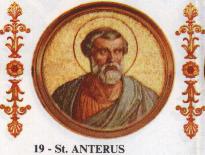 | St Anterus | Petilia, Italia, Roman Empire | 55 / 56 | Feast day 3 January. Also revered as a saint in Eastern Christianity, with a feast day of 5 August. | |
| 20 | 10 January 236 – 20 January 250 (14 years, 10 days) |  | St Fabian | Rome, Roman Empire | 36 / 50 | Divided the communities of Rome into seven districts, each supervised by a deacon. Feast day 20 January. Also revered as a saint in Eastern Christianity, with a feast day of 5 August. | |
| 21 | 6 March 251 – 25 June 253 (2 years, 111 days) |  | St Cornelius | Rome, Roman Empire | 71 / 73 | Feast day 16 September. Died a martyr through extreme hardship | |
| 22 | 25 June 253 – 5 March 254 (253 days) |  | St Lucius I | Rome, Roman Empire | 48 / 49 | Feast day 5 March. | |
| 23 | 12 March 254 – 2 August 257 (3 years, 143 days) |  | St Stephen I | Rome, Roman Empire | 54 / 57 | Feast day 2 August. Martyred by beheading; Also revered as a saint in Eastern Christianity, with the same feast day. | |
| 24 | 30 August 257 – 6 August 258 (341 days) |  | St Sixtus II | Athens, Greece, Roman Empire | 42 / 43 | Martyred by beheading. Also revered as a saint in Eastern Christianity, with a feast day of 10 August. | |
| 25 | 22 July 259 – 26 December 268 (9 years, 157 days) |  | St Dionysius | Terranova da Sibari, Italia, Roman Empire | 59 / 68 | Feast day 26 December. | |
| 26 | 5 January 269 – 30 December 274 (5 years, 359 days) |  | St Felix I | Rome, Roman Empire | 63 / 68 | ||
| 27 | 4 January 275 – 7 December 283 (8 years, 337 days) |  | St Eutychian | Luni, Italia, Roman Empire | 35 / 43 | ||
| 28 | 17 December 283 – 22 April 296 (12 years, 127 days) |  | St Caius | Salona, Dalmatia, Roman Empire | 38 / 51 | Martyred (according to legend) Feast day 22 April. Also revered as a saint in Eastern Christianity, with a feast day of 11 August. | |
| 29 | 30 June 296 – 26 April 304 (7 years, 301 days) |  | St Marcellinus | Rome, Roman Empire | 46 / 54 | Feast day 26 April. Also revered as a saint in Eastern Christianity, with a feast day of 7 June. | |
Popes of the 4th Century | |||||||
| 30 | 27 May 308 –16 January 309 (234 days) |  | St Marcellus I | Italia, Roman Empire | 53 / 54 | Banished from Rome under Maxentius (309). | |
| 31 | 18 April 309 – 17 August 309 (121 days) |  | St Eusebius | Sardinia, Roman Empire | 54 / 54 | Banished by the emperor Maxentius, and died in exile. | |
| 32 | 2 July 311 – 10 January 314 (2 years, 192 days) |  | St Miltiades | Africa, Roman Empire | 41 / 44 | First pope after the end of the persecution of Christians through the Edict of Milan (313 AD) issued by Constantine the Great. Presided over the Lateran council of 313. | |
| 33 | 31 January 314 – 31 December 335 (21 years, 334 days) |  | St Sylvester I | Sant'Angelo a Scala, Apulia et Calabria, Roman Empire | 29 / 50 | Feast day 31 December. Also revered as a saint in Eastern Christianity, with a feast day of 2 January. First Council of Nicaea (325). Under him was built: the Basilica of St. John Lateran, Santa Croce in Gerusalemme and Old St. Peter's Basilica. Donation of Constantine. | |
| 34 | 18 January 336 – 7 October 336 (263 days) (290 - 7 October 336) |  | St Mark | Rome, Roman Empire | 46 / 46 | One of Mark's undertakings was to compile stories of the lives of martyrs and bishops before his time. There is some reason to believe he founded two churches in the area of Rome. One of them is still known to this day as the Church of San Marco, although it is greatly changed since his time. The other church was at the Catacomb of Balbina, a cemetery. Emperor Constantine gave gifts of land and furnishing for both buildings. Feast day 7 October. | |
| 35 | 6 February 337 – 12 April 352 (15 years, 66 days) |  | St Julius I | Rome, Roman Empire | 57 / 72 | Arian controversy. Credited with splitting the birth of Christ into two distinct celebrations: The Epiphany stayed on the traditional date, and the Nativity was added on 25 December. | |
| 36 | 17 May 352 – 24 September 366 (14 years, 130 days) |  | Liberius | Rome, Roman Empire | 42 / 56 | Earliest pope not canonized by the Roman Catholic Church. Revered as a saint in Eastern Christianity, with a feast day of 27 August. | |
| 37 | 1 October 366 – 11 December 384 (18 years, 71 days) |  | St Damasus I | Egitania, Lusitania, Roman Empire | 60 / 78 | Patron of Jerome, commissioned the Vulgate translation of the Bible. Council of Rome (382). | |
| 38 | 17 December 384 – 26 November 399 (14 years, 344 days) |  | St Siricius | Rome, Roman Empire | 50 / 65 | His famous letters the earliest surviving texts of papal decretals focus particularly on religious discipline and include decisions on baptism, consecration, ordination, penance, and continence. Siricius’ important decretal of 386 (written to Bishop Himerius of Tarragona), commanding celibacy for priests, was the first decree on this subject. | |
| 39 | 27 November 399 – 19 December 401 (2 years, 22 days) |  | St Anastasius I | Rome, Roman Empire | 59 / 61 | Instructed priests to stand and bow their heads as they read from the Gospels. | |
Popes of the 5th Century | |||||||
| 40 | 21 December 401 – 12 March 417 (15 years, 81 days) |  | St Innocent I | Albano, Latium et Campania, Roman Empire | 41 / 57 | Visigoth Sack of Rome (410) under Alaric. | |
| 41 | 18 March 417 – 26 December 418 (1 year, 283 days) |  | St Zosimus | Mesoraca, Lucania et Bruttii Roman Empire | 47 / 48 | ||
| 42 | 28 December 418 – 4 September 422 (3 years, 250 days) |  | St Boniface I | Rome, Roman Empire | 43 / 47 | ||
| 43 | 10 September 422 – 27 July 432 (9 years, 321 days) |  | St Celestine I | Campania, Roman Empire | 42 / 52 | Also revered as a saint in Eastern Christianity, with a feast day of 8 April. | |
| 44 | 31 July 432 – 18 August 440 (8 years, 18 days) |  | St Sixtus III | Rome, Roman Empire | 42 / 50 | ||
| 45 | 29 September 440 – 10 November 461 (21 years, 42 days) |  | St Leo I | Etruria, Roman Empire | 50 / 71 | Feast day 10 November. Convinced Attila the Hun to turn back his invasion of Italy. Wrote the Tome which was instrumental in the Council of Chalcedon and in defining the hypostatic union. Also revered as a saint in Eastern Christianity, with a feast day of 18 February. | |
| 46 | 19 November 461 – 29 February 468 (6 years, 102 days) |  | St Hilarius | Sardinia, Western Roman Empire | 46 / 53 | ||
| 47 | 3 March 468 – 10 March 483 (15 years, 7 days) |  | St Simplicius | Tivoli, Western Roman Empire | 38 / 53 | ||
| 48 | 13 March 483 – 1 March 492 (8 years, 354 days) |  | St Felix III | Rome, Western Roman Empire | 43 / 52 | Sometimes called Felix II. | |
| 49 | 1 March 492 – 21 November 496 (4 years, 265 days) |  | St Gelasius I | Kabylie, Africa, Western Roman Empire | 82 / 86 | The last pope to have been born on the continent of Africa. The first pope called the "Vicar of Christ". | |
| 50 | 24 November 496 – 19 November 498 (1 year, 360 days) |  | Anastasius II | Rome, Western Roman Empire | 51 / 53 | Tried to end the Acacian schism but it resulted in the Laurentian schism. | |
| 51 | 22 November 498 – 19 July 514 (15 years, 239 days) |  | St Symmachus | Sardinia, Western Roman Empire | 38 / 54 | ||
Popes of the 6th Century | |||||||
| 52 | 20 July 514 – 6 August 523 (9 years, 17 days) |  | St Hormisdas | Frosinone, Latium et Campania, Western Roman Empire | 39 / 48 | Father of Pope Silverius. Acacian schism. | |
| 53 | 13 August 523 – 18 May 526 (2 years, 278 days) |  | St John I | Siena, Etruria, Western Roman Empire | 53 / 56 | ||
| 54 | 12 July 526 – 22 September 530 (4 years, 72 days) |  | St Felix IV | Samnium, Kingdom of Odoacer | 36 / 40 | Sometimes called Felix III. Built Santi Cosma e Damiano. | |
| 55 | 22 September 530 – 17 October 532 (2 years, 25 days) |  | Boniface II | Rome, Kingdom of Odoacer | 40 / 42 | Changed the numbering of the years in the Julian Calendar from Ab Urbe Condita to Anno Domini. | |
| 56 | 2 January 533 – 8 May 535 (2 years, 126 days) |  | John II | Rome, Western Roman Empire | 63 / 65 | First pope not to use his personal name. This was because of the Roman god, Mercury. | |
| 57 | 13 May 535 – 22 April 536 (356 days) |  | St Agapetus I | Rome, Kingdom of Odoacer | 45 / 46 | Feast days 22 April and 20 September. Also revered as a saint in Eastern Christianity, with a feast day of 17 April. | |
| 58 | 8 June 536 – 11 March 537 (276 days) |  | St Silverius | Ceccano, Ostrogothic Kingdom | 36 / 37 | feast day 20 June Exiled son of Pope Hormisdas. | |
| 59 | 29 March 537 – 7 June 555 (18 years, 70 days) |  | Vigilius | Rome, Kingdom of Odoacer | 37 / 55 | ||
| 60 | 16 April 556 – 4 March 561 (4 years, 322 days) |  | Pelagius I | Rome, Ostrogothic Kingdom | 51 / 56 | Credited with the construction of the basilica of Santi Apostoli. | |
| 61 | 17 July 561 – 13 July 574 (12 years, 361 days) |  | John III | Rome, Ostrogothic Kingdom | 41 / 54 | ||
| 62 | 2 June 575 – 30 July 579 (4 years, 58 days) |  | Benedict I | Rome, Ostrogothic Kingdom | 50 / 54 | ||
| 63 | 26 November 579 – 7 February 590 (10 years, 73 days) |  | Pelagius II | Rome, Ostrogothic Kingdom | 59 / 70 | Ordered the construction of the Basilica di San Lorenzo fuori le Mura. | |
| 64 | 3 September 590 – 12 March 604 (13 years, 191 days) |  | St Gregory I | Rome, Eastern Roman Empire | 50 / 64 | The first formally to employ the titles Servus servorum Dei and Pontifex Maximus. Established the Gregorian chant. Feast day 3 September. Also revered as a saint in Eastern Christianity, with a feast day of 12 March. Known as "the Father of Christian Worship". Known as "St. Gregory the Dialogist" in Eastern Orthodoxy. | |
Popes of the 7th Century | |||||||
| 65 | 13 September 604 – 22 February 606 (1 year, 162 days) |  | Sabinian | Blera, Eastern Roman Empire | 74 / 76 | ||
| 66 | 19 February 607 – 12 November 607 (266 days) |  | Boniface III | Rome, Eastern Roman Empire | 67 / 67 | ||
| 67 | 15 September 608 – 8 May 615 (6 years, 235 days) |  | St Boniface IV | Rome Eastern Roman Empire | 48 / 55 | First pope to bear the same name as his immediate predecessor. Member of the Order of Saint Benedict. | |
| 68 | 13 November 615 – 8 November 618 (2 years, 360 days) |  | St Adeodatus I | Rome, Eastern Roman Empire | 45 / 48 | Sometimes called Deusdedit, as a result Pope Adeodatus II is sometimes called Pope Adeodatus without a number. The first pope to use lead seals on papal documents, which in time came to be called Papal bulls. | |
| 69 | 23 December 619 – 25 October 625 (5 years, 306 days) |  | Boniface V | Naples, Eastern Roman Empire | 44 / 50 | ||
| 70 | 27 October 625 – 12 October 638 (12 years, 350 days) |  | Honorius I | Campania, Eastern Roman Empire | 40 / 53 | Named a heretic and anathematized by the Third Council of Constantinople. (680) | |
| 71 | 30 October 638 – 28 May 640 (1 year, 211 days) |  | Severinus | Rome, Eastern Roman Empire | 53 / 55 | ||
| 72 | 24 December 640 – 12 October 642 (1 year, 292 days) |  | John IV | Zadar, Dalmatia, Eastern Roman Empire | 40 / 42 | ||
| 73 | 24 November 642 – 14 May 649 (6 years, 171 days) |  | Theodore I | Jerusalem, Eastern Roman Empire | 32 / 39 | The last pope from Palestine. Planned the Lateran Council of 649, but died before it could open. | |
| 74 | 5 July 649 – 12 November 655 (6 years, 130 days) |  | St Martin I | Near Todi, Umbria, Eastern Roman Empire | 59 / 65 | Last pope recognized as a martyr. Feast day of 12 November. Also revered as a saint in Eastern Christianity, with a feast day of 14 April. | |
| 75 | 10 August 654 - 2 June 657 (2 years, 296 days) |  | St Eugene I | Rome, Duchy of Rome (formally Eastern Roman Empire) | 39 / 42 | ||
| 76 | 30 July 657 – 27 January 672 (14 years, 181 days) |  | St Vitalian | Segni, Duchy of Rome (formally Eastern Roman Empire) | 57 / 72 | ||
| 77 | 11 April 672 – 17 June 676 (4 years, 67 days) |  | Adeodatus II | Rome, Duchy of Rome (formally Eastern Roman Empire) | 51 / 55 | Sometimes called Pope Adeodatus (without a number) in reference to Pope Adeodatus I sometimes being called Pope Deusdedit. Member of the Order of Saint Benedict. | |
| 78 | 2 November 676 – 11 April 678 (1 year, 160 days) |  | Donus | Rome, Duchy of Rome (formally Eastern Roman Empire) | 66 / 68 | ||
| 79 | 27 June 678 – 10 January 681 (2 years, 197 days) |  | St Agatho | Palermo, Eastern Roman Empire | 101 / 104 | Also revered as a saint in Eastern Christianity, with a feast day of 20 February. | |
| 80 | 17 August 682 – 3 July 683 (351 days) |  | St Leo II | Leone Aidone, Eastern Roman Empire | 71 / 72 | Feast day 3 July. | |
| 81 | 26 June 684 – 8 May 685 (316 days) |  | St Benedict II | Rome, Duchy of Rome (formally Eastern Roman Empire) | 49 / 50 | Feast day 7 May. | |
| 82 | 12 August 685 – 2 August 686 (355 days) |  | John V | Syria, Eastern Roman Empire | 50 / 51 | ||
| 83 | 21 October 686 – 21 September 687 (335 days) |  | Conon | Thrace, Eastern Roman Empire | 56 / 57 | ||
| 84 | 15 December 687 – 8 September 701 (13 years, 267 days) |  | St Sergius I | Palermo, Eastern Roman Empire | 37 / 51 | Introduced the singing of the Lamb of God at mass. | |
Popes of the 8th Century | |||||||
| 85 | 30 October 701 – 11 January 705 (3 years, 73 days) |  | John VI | Ephesus, Eastern Roman Empire | 46 / 50 | ||
| 86 | 1 March 705 – 18 October 707 (2 years, 231 days) |  | John VII | Rossano, Calabria, Eastern Roman Empire | 55 / 57 | The second pope to bear the same name as his immediate predecessor. | |
| 87 | 15 January 708 – 4 February 708 (20 days) |  | Sisinnius | Syria, Rashidun Caliphate | 58 / 58 | ||
| 88 | 25 March 708 – 9 April 715 (7 years, 15 days) |  | Constantine | Syria, Umayyad Caliphate | 44 / 51 | Last pope to visit Greece while in office, until John Paul II in 2001. | |
| 89 | 19 May 715 – 11 February 731 (15 years, 268 days) |  | St Gregory II | Rome, Duchy of Rome (formally Eastern Roman Empire) | 46 / 62 | Feast day 11 February. Held the Synod of Rome (721). | |
| 90 | 18 March 731 – 28 November 741 (10 years, 255 days) |  | St Gregory III | Syria, Umayyad Caliphate | 41 / 51 | The third pope to bear the same name as his immediate predecessor. Was previously the last pope to have been born outside Europe until the election of Francis in 2013. | |
| 91 | 3 December 741 – 22 March 752 (10 years, 110 days) |  | St Zachary | Santa Severina, Calabria, Eastern Roman Empire | 62 / 73 | Feast day 15 March. Built the church of Santa Maria sopra Minerva. | |
| (never con- secrated) | 22 March 752 – 25 March 752 (3 days) (Never took office) |  | Pope-elect Stephen | Rome, Duchy of Rome (formally Eastern Roman Empire) | 52 / 52 | Sometimes known as Stephen II. Died three days after his election; never receiving episcopal consecration. Some lists still include him. The Vatican sanctioned his addition in the sixteenth century; removed in 1961. He is no longer considered a pope by the Catholic Church. | |
| 92 | 26 March 752 – 26 April 757 (5 years, 31 days) |  | Stephen II | Rome, Duchy of Rome (formally Eastern Roman Empire) | 38 / 43 | Sometimes called Stephen III. The Donation of Pepin. Brother of Paul I. | |
| 93 | 29 May 757 – 28 June 767 (10 years, 30 days) |  | St Paul I | Rome, Duchy of Rome (formally Eastern Roman Empire) | 57 / 67 | Brother of Stephen II. | |
| 94 | 7 August 768 – 24 January 772 (3 years, 170 days) |  | Stephen III | Syracuse, Duchy of Rome (formally Eastern Roman Empire) | 45 / 49 | Sometimes called Stephen IV. The Lateran Council (769). | |
| 95 | 1 February 772 – 26 December 795 (23 years, 328 days) |  | Adrian I | Rome, Duchy of Rome (formally Eastern Roman Empire) | 60 / 83 | ||
| 96 | 26 December 795 – 12 June 816 (20 years, 169 days) |  | St Leo III | Rome, Papal States | 45 / 66 | Crowned Charlemagne Imperator Augustus on Christmas Day, 800, thereby initiating what would become the office of Holy Roman Emperor requiring the imprimatur of the pope for its legitimacy. | |
Popes of the 9th Century | |||||||
| 97 | 22 June 816 – 24 January 817 (216 days) |  | Stephen IV | Rome, Papal States | 46 / 47 | Sometimes called Stephen V. | |
| 98 | 25 January 817 – 11 February 824 (7 years, 17 days) |  | St Paschal I | Rome, Papal States | 42 / 49 | Credited with finding the body of Saint Cecilia in the Catacomb of Callixtus, building the basilica of Santa Cecilia in Trastevere and the church of Santa Maria in Domnica. | |
| 99 | 8 May 824 – 27 August 827 (3 years, 111 days) |  | Eugene II | Rome, Papal States | 44 / 47 | ||
| 100 | 31 August 827 – 10 October 827 (40 days) |  | Valentine | Rome, Papal States | 47 / 47 | ||
| 101 | 20 December 827 – 25 January 844 (16 years, 36 days) |  | Gregory IV | Rome, Papal States | 37 / 54 | Rebuilt the atrium of St. Peter’s Basilica and in the newly decorated chapel transferred the body of Gregory I. | |
| 102 | 25 January 844 – 27 January 847 (3 years, 2 days) |  | Sergius II | Rome, Papal States | 54 / 57 | ||
| 103 | 10 April 847 – 17 July 855 (8 years, 98 days) |  | St Leo IV | Rome, Papal States | 57 / 65 | Member of the Order of Saint Benedict. | |
| 104 | 29 September 855 – 7 April 858 (2 years, 190 days) |  | Benedict III | Rome, Papal States | 45 / 48 | ||
| 105 | 24 April 858 – 13 November 867 (9 years, 203 days) |  | St Nicholas I | Rome, Papal States | 39 / 48 | Encouraged missionary activity. | |
| 106 | 14 December 867 – 14 December 872 (5 years, 0 days) |  | Adrian II | Rome, Papal States | 75 / 80 | ||
| 107 | 14 December 872 – 16 December 882 (10 years, 2 days) |  | John VIII | Rome, Papal States | 52 / 62 | ||
| 108 | 16 December 882 – 15 May 884 (1 year, 151 days) |  | Marinus I | Gallese, Papal States | 52 / 54 | Sometimes also known as and called "Martin II." | |
| 109 | 17 May 884 – 15 September 885 (1 year, 121 days) |  | St Adrian III | Rome, Papal States | 49 / 50 | ||
| 110 | 14 September 885 – 4 September 891 (5 years, 355 days) |  | Stephen V | Rome, Papal States | 45 / 51 | Sometimes called Stephen VI. | |
| 111 | 6 October 891 – 4 April 896 (4 years, 181 days) |  | Formosus | Ostia, Papal States | 75 / 80 | Posthumously ritually executed following the Cadaver Synod. | |
| 112 | 11 April 896 – 26 April 896 (15 days) |  | Boniface VI | Rome, Papal States | 90 / 90 | ||
| 113 | 22 May 896 – 14 August 897 (1 year, 84 days) |  | Stephen VI | Rome, Papal States | 46 / 47 | Sometimes called Stephen VII. Held the infamous Cadaver Synod. | |
| 114 | 14 August 897 – November 897 (92 days) |  | Romanus | Gallese, Papal States | 47 / 47 | ||
| 115 | December 897 - 20 December 897 (20 days) |  | Theodore II | Rome, Papal States | 57 / 57 | ||
| 116 | 18 January 898 – 5 January 900 (1 year, 352 days) |  | John IX | Tivoli, Papal States | 58 / 60 | Member of the Order of Saint Benedict. | |
Popes of the 10th Century | |||||||
| 117 | 1 February 900 – 30 July 903 (3 years, 179 days) |  | Benedict IV | Rome, Papal States | 60 / 63 | ||
| 118 | 30 July 903 – December 903 (123 days) |  | Leo V | Ardea, Papal States | 58 / 58 | ||
| 119 | 29 January 904 – 14 April 911 (7 years, 75 days) |  | Sergius III | Rome, Papal States | 44 / 51 | "Saeculum obscurum" begins. The first pope to be depicted with the Papal Tiara. | |
| 120 | 14 April 911 – June 913 (2 years, 47 days) |  | Anastasius III | Rome, Papal States | 46 / 48 | ||
| 121 | 7 July 913 – 25 February 914 (233 days) |  | Lando | Sabina, Papal States | 48 / 49 | ||
| 122 | March 914 – 28 May 928 (14 years, 89 days) |  | John X | Tossignano, Romagna (formally part of the Papal States) | 54 / 68 | ||
| 123 | 28 May 928 – December 928 (186 days) | | Leo VI | Rome, Papal States | 48 / 48 | ||
| 124 | 3 February 929 – 13 February 931 (2 years, 10 days) |  | Stephen VII | Rome, Papal States | 49 / 51 | Sometimes called Stephen VIII. | |
| 125 | 15 March 931 – December 935 (4 years, 260 days) |  | John XI | Rome, Papal States | 21 / 25 | ||
| 126 | 3 January 936 – 13 July 939 (3 years, 191 days) |  | Leo VII | Rome, Papal States | 41 / 44 | Member of the Order of Saint Benedict. | |
| 127 | 14 July 939 – 30 October 942 (3 years, 108 days) |  | Stephen VIII | Rome, Papal States | 39 / 42 | Sometimes called Stephen IX. | |
| 128 | 30 October 942 – 1 May 946 (3 years, 183 days) |  | Marinus II | Rome, Papal States | 42 / 46 | ||
| 129 | 10 May 946 – 8 November 955 (9 years, 182 days) |  | Agapetus II | Rome, Papal States | 41 / 50 | ||
| 130 | 16 December 955 – 6 December 963 (8 years, 356 days) |  | John XII | Rome, Papal States | 18 / 26 | Deposed in 963 by Emperor Otto invalidly; end of the "Saeculum obscurum". | |
| 6 December 963 – 26 February 964 (82 days) |  | Antipope Leo VIII | Rome, Papal States | 48 / 49 | Appointed antipope by Emperor Otto in 963 in opposition to John XII and Benedict V. He became the true pope after Benedict V was deposed. | ||
| 130 | 26 February 964 – 14 May 964 (78 days) | | John XII | Rome, Papal States | 27 / 27 | Murdered in 964. | |
| 131 | 22 May 964 – 23 June 964 (32 days) |  | Benedict V | Rome, Papal States | 49 / 49 | Elected by the people of Rome, in opposition to the Antipope Leo VIII who was appointed by Emperor Otto; he accepted his own deposition in 964 leaving Leo VIII as the sole pope. | |
| 132 | 23 June 964 – 1 March 965 (251 days) | | Leo VIII | Rome, Papal States | 49 / 50 | Became the true pope after Benedict V was deposed. | |
| 133 | 1 October 965 – 6 September 972 (6 years, 341 days) |  | John XIII | Rome, Papal States | 45 / 52 | Chronicled after his death as "the Good". | |
| 134 | 19 January 973 – 8 June 974 (1 year, 140 days) |  | Benedict VI | Rome, Papal States | 48 / 49 | Deposed and murdered. | |
| 135 | October 974 – 10 July 983 (8 years, 283 days) |  | Benedict VII | Rome, Papal States | 44 / 53 | ||
| 136 | December 983 – 20 August 984 (264 days) |  | John XIV | Pavia, Kingdom of Italy, Holy Roman Empire | 43 / 44 | First Pope since John III not to use his personal name. | |
| 137 | 20 August 985 – 1 April 996 (10 years, 225 days) |  | John XV | Rome, Papal States | 35 / 46 | The first pope to formally canonize a saint. | |
| 138 | 3 May 996 – 18 February 999 (2 years, 291 days) |  | Gregory V | Duchy of Saxony, Holy Roman Empire | 24 / 27 | First German Pope. | |
| 139 | 2 April 999 – 12 May 1003 (4 years, 40 days) |  | Sylvester II | Belliac, France | 53 / 57 | The first French pope. | |
2nd Millennium
| |||||||
| 140 | 16 May 1003 – 6 November 1003 (174 days) |  | John XVII | Rome, Papal States | 48 / 48 | ||
| 141 | 25 December 1003 – 18 July 1009 (5 years, 205 days) |  | John XVIII | Rapagnano, Papal States | 43 / 49 | ||
| 142 | 31 July 1009 – 12 May 1012 (2 years, 286 days) |  | Sergius IV | Rome, Papal States | 44 / 47 | ||
| 143 | 18 May 1012 – 9 April 1024 (11 years, 327 days) |  | Benedict VIII | Rome, Papal States | 32 / 44 | ||
| 144 | 14 May 1024 – 6 October 1032 (8 years, 145 days) |  | John XIX | Rome, Papal States | 49 / 57 | ||
| 145 | 21 October 1032 – 31 December 1044 (12 years, 71 days) |  | Benedict IX | Rome, Papal States | 20 / 32 | 1st Term. Pope on three occasions between October 1032 and July 1048 He is one of the youngest popes in history. He is the only man to have been Pope on more than one occasion and the only man ever to have sold the papacy. | |
| 146 | 13 January 1045 – 10 March 1045 (56 days) |  | Sylvester III | Rome, Papal States | 45 / 45 | Validity of election questioned; considered Anti-Pope; deposed at the Council of Sutri. | |
| 147 | 10 March 1045 – 1 May 1045 (52 days) | | Benedict IX | Rome, Papal States | 33 / 33 | 2nd Term; deposed at the Council of Sutri. | |
| 148 | 5 May 1045 – 20 December 1046 (1 year, 229 days) |  | Gregory VI | Rome, Papal States | 45 / 46 | Deposed at the Council of Sutri. | |
| 149 | 24 December 1046 – 9 October 1047 (289 days) |  | Clement II | Hornburg, Duchy of Saxony, Holy Roman Empire | 41 / 42 | Appointed by Henry III at the Council of Sutri; crowned Henry III as Holy Roman Emperor. | |
| 150 | 8 November 1047 – 17 July 1048 (252 days) | | Benedict IX | Rome, Papal States | 35 / 36 | 3rd Term; deposed and excommunicated. | |
| 151 | 17 July 1048 – 9 August 1048 (23 days) |  | Damasus II | Pildenau, Duchy of Bavaria, Holy Roman Empire | 48 / 48 | ||
| 152 | 12 February 1049 – 19 April 1054 (5 years, 66 days) |  | St Leo IX | Eguisheim, Duchy of Swabia, Holy Roman Empire | 47 / 51 | In 1054, mutual excommunications of Leo IX and Patriarch of Constantinople Michael I Cerularius began the East–West Schism. The anathematizations were rescinded by Pope Paul VI and Patriarch Athenagoras in 1965. | |
| 153 | 13 April 1055 – 28 July 1057 (2 years, 106 days) |  | Victor II | Gebhard II von Calw-Dollnstein-Hirschberg Duchy of Swabia, Holy Roman Empire | 37 / 39 | ||
| 154 | 2 August 1057 – 29 March 1058 (239 days) |  | Stephen IX | Duchy of Lorraine, Holy Roman Empire | 37 / 38 | Sometimes called Stephen X. Member of the Order of Saint Benedict. | |
| 155 | 6 December 1058 – 27 July 1061 (2 years, 233 days) |  | Nicholas II | Château de Chevron, County of Savoy, Holy Roman Empire | 63 / 66 | In 1059 the College of Cardinals was designated the sole body of pope electors in the document In nomine Domini. (Papal conclave). | |
| 156 | 30 September 1061 – 21 April 1073 (11 years, 203 days) |  | Alexander II | Baggio, Milan Holy Roman Empire | 46 / 58 | Authorised the Norman conquest of England in 1066. | |
| 157 | 22 April 1073 – 25 May 1085 (12 years, 33 days) |  | St Gregory VII | Sovana, March of Tuscany, Holy Roman Empire | 48 / 60 | Initiated the Gregorian Reforms. Restricted the use of the title "Papa" to the Bishop of Rome. Member of the Order of Saint Benedict. Political struggle with German Emperor Henry IV, who had to go to Canossa (1077). | |
| 158 | 24 May 1086 – 16 September 1087 (1 year, 115 days) |  | Bl. Victor III | Benevento, Duchy of Benevento | 60 / 61 | Member of the Order of Saint Benedict. Called the Synod of Benevento (1087) Condemning lay investiture. | |
| 159 | 12 March 1088 – 29 July 1099 (11 years, 139 days) |  | Bl. Urban II | Châtillon-sur-Marne, County of Champagne, France | 46 / 57 | Preached and started the First Crusade. Member of the Order of Saint Benedict. | |
| 160 | 13 August 1099 – 21 January 1118 (18 years, 161 days) |  | Paschal II | Bleda, March of Tuscany, Holy Roman Empire | 49 / 68 | Member of the Order of Saint Benedict. Ordered the building of the basilica of Santi Quattro Coronati. | |
Popes of the 12th Century | |||||||
| 161 | 24 January 1118 – 29 January 1119 (1 year, 5 days) |  | Gelasius II | Gaeta, Duchy of Gaeta | 57 / 58 | Member of the Order of Saint Benedict. | |
| 162 | 2 February 1119 – 13 December 1124 (5 years, 315 days) |  | Callixtus II | Quingey, Franche-Comté | 59 / 64 | Opened the First Council of the Lateran in 1123 | |
| 163 | 21 December 1124– 13 February 1130 (5 years, 54 days) |  | Honorius II | Fiagnano, Romagna, Holy Roman Empire | 64 / 70 | Canon Regular of S. Maria di San Reno. Approved the new military order of the Knights Templar in 1128. | |
| 164 | 14 February 1130 – 24 September 1143 (13 years, 222 days) |  | Innocent II | Rome, Papal States | 48 / 61 | Canon Regular of Lateran Convened the Second Council of the Lateran, 1139 | |
| 165 | 26 September 1143 – 8 March 1144 (164 days) |  | Celestine II | Città di Castello, Papal States | 58 / 59 | ||
| 166 | 12 March 1144 – 15 February 1145 (340 days) |  | Lucius II | Bologna, Holy Roman Empire | 49 / 50 | Canon Regular of S. Frediano di Lucca. | |
| 167 | 15 February 1145 – 8 July 1153 (8 years, 143 days) |  | Bl. Eugene III | Montemagno, Republic of Pisa | 44 / 52 | Member of the Order of Cistercians. Announced the Second Crusade. | |
| 168 | 12 July 1153 – 3 December 1154 (1 year, 144 days) |  | Anastasius IV | Rome, Papal States | 80 / 81 | ||
| 169 | 4 December 1154 – 1 September 1159 (4 years, 271 days) |  | Adrian IV | Abbots Langley, Hertfordshire, Kingdom of England | 54 / 59 | First and only English pope; purportedly granted Ireland to Henry II, King of England. Canon Regular of St. Rufus Monastery . | |
| 170 | 7 September 1159 – 30 August 1181 (21 years, 357 days) |  | Alexander III | Siena, Republic of Siena | 59 / 81 | Convened the Third Council of the Lateran, 1179. | |
| 171 | 1 September 1181 – 25 November 1185 (4 years, 85 days) |  | Lucius III | Lucca, March of Tuscany, Holy Roman Empire | 84 / 88 | ||
| 172 | 25 November 1185 – 20 October 1187 (1 year, 329 days) |  | Urban III | Cuggiono, Holy Roman Empire | 65 / 67 | ||
| 173 | 21 October 1187 – 17 December 1187 (57 days) |  | Gregory VIII | Benevento, Papal States | 79 / 79 | Canon Regular Premostratense. Proposed the Third Crusade. | |
| 174 | 19 December 1187 – 20 March 1191 (3 years, 91 days) |  | Clement III | Rome, Papal States | 57 / 61 | ||
175 |
30 March 1191 – 8 January 1198 (6 years, 284 days) |  | Celestine III | Rome, Papal States | 85 / 92 | Confirmed the statutes of the Teutonic Knights as a military order. | |
176 |
8 January 1198 – 16 July 1216 (18 years, 190 days) |  | Innocent III | Gavignano, Papal States | 37 / 55 | Convened the Fourth Council of the Lateran, 1215. Initiated the Fourth Crusade but later distanced himself from it and threatened participants with excommunication when it became clear that the leadership abandoned a focus on conquest of the Holy Land and instead intended to sack Christian cities. | |
Popes of the 13th Century | |||||||
177 |
18 July 1216 – 18 March 1227 (10 years, 243 days) |  | Honorius III | Rome, Papal States | – | Initiated the Fifth Crusade. Approved several religious and tertiary orders. | |
178 |
19 March 1227 – 22 August 1241 (14 years, 156 days) |  | Gregory IX | Anagni, Papal States | – | Canonized Elisabeth of Hungary (1235). Initiated the Inquisition in France and endorsed the Northern Crusades. | |
179 |
25 October 1241 – 10 November 1241 (16 days) |  | Celestine IV | Milan, Italy, Holy Roman Empire | – | Died before coronation. | |
180 |
25 June 1243 – 7 December 1254 (11 years, 165 days) |  | Innocent IV | Genoa, Republic of Genoa, Holy Roman Empire | – | Convened the First Council of Lyons (1245). Issued the bull Ad extirpanda that permitted the torture of heretics (1252). | |
|
181 |
12 December 1254 – 25 May 1261 (6 years, 164 days) |  | Alexander IV | Jenne, Papal States | – | Established an Inquisition in France. | |
182 |
29 August 1261 – 2 October 1264 (3 years, 34 days) |  | Urban IV | Troyes, County of Champagne, France | – | Instituted the feast of Corpus Christi (1264). | |
183 |
5 February 1265 – 29 November 1268 (3 years, 298 days) |  | Clement IV | Saint-Gilles, Languedoc, France | – | ||
 | 29 November 1268 – 1 September 1271 | Interregnum | Almost 3 year period without a valid pope elected. This was due to a deadlock among cardinals voting for the pope. | ||||
184 |
1 September 1271 – 10 January 1276 (4 years, 131 days) |  | Bl. Gregory X | Piacenza, Italy, Holy Roman Empire | – | Convened the Second Council of Lyons (1274). Responsible for regulation all papal conclaves until the 20th century. | |
185 |
21 January 1276 – 22 June 1276 (153 days) |  | Bl. Innocent V | County of Savoy, Holy Roman Empire | – | Member of the Dominican Order. | |
|
186 |
11 July 1276 – 18 August 1276 (38 days) |  | Adrian V | Genoa, Republic of Genoa, Holy Roman Empire | – | Annulled Gregory X's papal bull on the regulations of papal conclaves. | |
187 |
8 September 1276 – 20 May 1277 (254 days) |  | John XXI | Lisbon, Portugal | – | Due to a confusion over the numbering of popes named John in the 13th century, there was no John XX. There has never been a John XX, because the 20th pope of this name formerly when elected, decided to skip the number XX and be counted as John XXI instead. He wanted to correct what in his time was believed to be an error in the counting of his predecessors John XV to XIX | |
188 |
25 November 1277 – 22 August 1280 (2 years, 271 days) |  | Nicholas III | Rome, Papal States | – | ||
189 |
22 February 1281 – 28 March 1285 (4 years, 34 days) |  | Martin IV | Meinpicien, Touraine, France | – | ||
190 |
2 April 1285 – 3 April 1287 (2 years, 1 day) |  | Honorius IV | Rome, Papal States | – | ||
191 |
22 February 1288 – 4 April 1292 (4 years, 42 days) |  | Nicholas IV | Lisciano, Papal States | – | Member of the Franciscan Order. | |
|
| 4 April 1292 – 5 July 1294 | Interregnum | 2 year period without a valid pope elected. This was due to a deadlock among cardinals voting for the pope. | ||||
192 |
5 July 1294 – 13 December 1294 (161 days) |  | St Celestine V | Sant'Angelo Limosano, Kingdom of Sicily | – | One of the few popes who resigned voluntarily. Member of the Order of Saint Benedict. Founded the Celestines. | |
193 |
24 December 1294 – 11 October 1303 (8 years, 291 days) |  | Boniface VIII | Anagni, Papal States | – | Formalized the Jubilee in 1300. Issued Unam Sanctam (1302) which proclaimed papal supremacy and pushing it to its historical extreme. | |
Popes of the 14th Century | |||||||
194 |
22 October 1303 – 7 July 1304 (259 days) |  | Bl. Benedict XI | Treviso | – | Member of the Dominican Order. Reverted Boniface VIII's Unam Sanctam. | |
195 |
5 June 1305 – 20 April 1314 (8 years, 319 days) |  | Clement V | Villandraut, Gascony, France | – | Pope at Avignon. Convened the Council of Vienne (1311–1312). Initiated the persecution of the Knights Templar with the bull Pastoralis Praeeminentiae under pressure from King Philip IV of France. | |
|
| 20 April 1314 – 7 August 1316 | Interregnum | Two-year period without a valid pope elected. This was due to a deadlock among cardinals voting for the pope. | ||||
196 |
7 August 1316 – 4 December 1334 (18 years, 119 days) |  | John XXII | Cahors, Quercy, France | – | Pope at Avignon. Controversial for his views on the Beatific Vision. | |
197 |
20 December 1334 – 25 April 1342 (7 years, 126 days) |  | Benedict XII | Saverdun, County of Foix, France | – | Pope at Avignon. Member of the Order of Cistercians. Known for issuing the Apostolic constitution Benedictus Deus (1336). | |
198 |
7 May 1342 – 6 December 1352 (10 years, 213 days) |  | Clement VI | Maumont, Limousin, France | – | Pope at Avignon. Reigned during the Black Death and absolved those who died of it of their sins. | |
199 |
18 December 1352 – 12 September 1362 (9 years, 268 days) |  | Innocent VI | Les Monts, Limousin, France | – | Pope at Avignon. Through his exertions the Treaty of Brétigny (1360) was brought about. | |
200 |
28 September 1362 – 19 December 1370 (8 years, 82 days) |  | Bl. Urban V | Grizac, Languedoc, France | – | Pope at Avignon. Member of the Order of Saint Benedict. Reformed areas of education and sent missionary movements across Europe and Asia. His pontificate witnessed the Alexandrian and Savoyard crusades. | |
|
201 |
30 December 1370 – 27 March 1378 (7 years, 87 days) |  | Gregory XI | Maumont, Limousin, France | – | Pope at Avignon; returns to Rome. The last French pope. | |
202 |
8 April 1378 – 15 October 1389 (11 years, 190 days) |  | Urban VI | Naples, Kingdom of Naples | – | Western Schism. Last pontiff to be elected outside the College of Cardinals. | |
203 |
2 November 1389 – 1 October 1404 (14 years, 334 days) |  | Boniface IX | Naples, Kingdom of Naples | – | Western Schism. | |
Popes of the 15th Century | |||||||
204 | 17 October 1404 – 6 November 1406 (2 years, 20 days) |  | Innocent VII | Sulmona, Kingdom of Naples | 65 / 67 | Western Schism | |
205 | 30 November 1406 – 4 July 1415 (8 years, 216 days) |  | Gregory XII | Venice, Republic of Venice | 80 / 91 | Western Schism; abdicated during the Council of Constance, which had been called by his opponent John XXIII. Last pope to resign until Pope Benedict XVI. | |
|
| 4 July 1415 – 11 November 1417 | Interregnum | Two-year period without a valid pope elected. | ||||
206 | 11 November 1417 – 20 February 1431 (13 years, 101 days) |  | Martin V | Genazzano, Papal States | 48 / 62 | Convened the Council of Basel (1431). Initiated the Hussite Wars. | |
207 | 3 March 1431 – 23 February 1447 (15 years, 357 days) |  | Eugene IV | Venice, Republic of Venice | 47 / 63 | Member of the Augustinian Order. Nephew of Martin V. Crowned Sigismund emperor at Rome in 1433 Transferred the Council of Basel to Ferrara. It was later transferred again to Florence because of the Bubonic plague. | |
208 | 6 March 1447 – 24 March 1455 (8 years, 18 days) |  | Nicholas V | Sarzana, Republic of Genoa | 49 / 57 | Member of the Dominican Order. Held the Jubilee of 1450. Crowned Frederick III emperor at Rome (1452). Issued the Papal Bull Dum Diversas allowing Portugal's right to conquer and subjugate Saracens and pagans (1452). Created a library in the Vatican which would eventually become the Bibliotheca Apostolica Vaticana. | |
209 | 8 April 1455 – 6 August 1458 (3 years, 120 days) |  | Callixtus III | Xàtiva, Kingdom of Valencia, Crown of Aragon | 76 / 79 | The first Spanish pope. Ordered the Feast of the Transfiguration to be celebrated on 6 August. Ordered the retrial of Joan of Arc, in which she was vindicated. | |
210 | 19 August 1458 – 15 August 1464 (5 years, 362 days) |  | Pius II | Corsignano, Republic of Siena | 52 / 58 | Displayed a great interest in urban planning. Founded Pienza near Siena as the ideal city in 1462. Known for his work on the Commentaries. | |
211 | 30 August 1464 – 26 July 1471 (6 years, 330 days) |  | Paul II | Venice, Republic of Venice | 47 / 54 | The nephew of Eugene IV. Built the Palazzo San Marco (now Palazzo Venezia). Approved the introduction of printing in the Papal States. | |
212 | 9 August 1471 – 12 August 1484 (13 years, 3 days) |  | Sixtus IV | Ligure, Republic of Genoa | 57 / 70 | Member of the Franciscan Order. Commissioned the Sistine Chapel. Authorized an Inquisition targeting converted Jewish Christians in Spain at the request of Queen Isabella and King Ferdinand. | |
213 | 29 August 1484 – 25 July 1492 (7 years, 331 days) |  | Innocent VIII | Genoa, Republic of Genoa | 51 / 59 | Appointed Tomás de Torquemada. Endorsed the prosecution of witchcraft in the bull Summis desiderantes affectibus (1484). | |
214 | 11 August 1492 – 18 August 1503 (11 years, 7 days) |  | Alexander VI | Xàtiva, Kingdom of Valencia, Crown of Aragon | 61 / 72 | Nephew of Callixtus III; father to Cesare Borgia and Lucrezia Borgia. Divided the extra-European world between Spain and Portugal in the bull Inter caetera (1493). No Alexander V due to the antipope. | |
Popes of the 16th Century | |||||||
215 |
22 September 1503 – 18 October 1503 (26 days) |  | Pius III | Siena, Republic of Siena | 64 / 64 | Nephew of Pius II. Founded the Piccolomini Library adjourning the Siena Cathedral. | |
216 |
31 October 1503 – 21 February 1513 (9 years, 113 days) |  | Julius II | Albisola, Republic of Genoa | 59 / 69 | Nephew of Sixtus IV convened the Fifth Council of the Lateran (1512). Took control of all the Papal States for the first time. Commissioned Michelangelo to paint the Sistine Chapel ceiling. Proposed plans for rebuilding St Peter's Basilica. | |
217 |
9 March 1513 – 1 December 1521 (8 years, 267 days) |  | Leo X | Florence, Republic of Florence | 37 / 45 | Son of Lorenzo the Magnificent. Closed the Fifth Council of the Lateran. Remembered for granting indulgences to those who donated to rebuild St. Peter's Basilica; excommunicated Martin Luther (1521). Extended the Spanish Inquisition into Portugal. | |
218 |
January 1522 – 14 September 1523 (1 year, 248 days) |  | Adrian VI | Utrecht, Bishopric of Utrecht, Holy Roman Empire (now Netherlands) | 62 / 64 | The only Dutch pope; last non-Italian to be elected pope until John Paul II in 1978. Tutor of Emperor Charles V. Retained his baptismal name as his regnal name. | |
219 |
26 November 1523 – 25 September 1534 (10 years, 303 days) |  | Clement VII | Florence, Republic of Florence | 45 / 56 | Cousin of Leo X. Rome plundered by imperial troops (1527). Forbade the divorce of Henry VIII; crowned Charles V as emperor at Bologna (1530). His niece was married to the future Henry II of France. Ordered Michelangelo's painting of The Last Judgment in the Sistine Chapel. | |
220 |
13 October 1534 – 10 November 1549 (15 years, 28 days) |  | Paul III | Canino, Lazio, Papal States | 66 / 81 | Opened the Council of Trent (1545). His illegitimate son became the first Duke of Parma. Decreed the second and final excommunication of Henry VIII. Appointed Michelangelo to supervise construction of St. Peter's Basilica (1546). | |
221 |
7 February 1550 – 29 March 1555 (5 years, 50 days) |  | Julius III | Rome, Lazio, Papal States | 62 / 67 | Established the Collegium Germanicum (1552) . Reconvened the Council of Trent. The Innocenzo Scandal. | |
222 |
9 April 1555 – 1 May 1555 (0 years, 22 days) |  | Marcellus II | Montefano, Marche, Papal States | 53 / 53 | The last to use his birth name as the regnal name. Instituted immediate economies in Vatican expenditures. The Missa Papae Marcelli composed in his honour. | |
223 |
23 May 1555 – 18 August 1559 (4 years, 87 days) |  | Paul IV | Irpina, Campania, Kingdom of Naples | 78 / 83 | Member of the Theatines. Established the Roman Ghetto in Cum Nimis Absurdum (1555) and established the Index of Forbidden Books. Ordered Michelangelo to repaint the nudes of The Last Judgment modestly. | |
224 |
26 December 1559 – 9 December 1565 (5 years, 348 days) |  | Pius IV | Milan, Duchy of Milan | 60 / 66 | Reopened and closed the Council of Trent. Ordered public construction to improve the water supply of Rome. Instituted the Tridentine Creed. | |
225 |
7 January 1566 – 1 May 1572 (6 years, 115 days) |  | St Pius V | Bosco, Piedmont, Duchy of Milan | 61 / 68 | Member of the Dominican Order. Excommunicated Elizabeth I (1570). Battle of Lepanto (1571) instituted the feast of Our Lady of Victory. Issued the 1570 Roman Missal. | |
226 |
13 May 1572 – 10 April 1585 (12 years, 332 days) |  | Gregory XIII | Bologna, Emilia-Romagna, Papal States | 70 / 83 | Reformed the calendar (1582) built the Gregorian Chapel in the Vatican. The first pope to bestow the Immaculate Conception as Patroness to the Philippine Islands through the bull Ilius Fulti Præsido (1579). Strengthened diplomatic ties with Asian nations. | |
227 |
24 April 1585 – 27 August 1590 (5 years, 125 days) |  | Sixtus V | Grottammare, Marche, Papal States | 63 / 68 | Member of the Conventual Franciscan Order. Known for fixing and completing building works to major basilicas in Rome. Limited the College of Cardinals to 70 in number doubled the number of curial congregations. | |
228 |
15 September 1590 – 27 September 1590 (12 days) |  | Urban VII | Rome, Lazio, Papal States | 69 / 69 | Shortest-reigning pope died before coronation. Set the first known worldwide smoking ban, banning smoking in and near all churches. | |
229 |
5 December 1590 – 16 October 1591 (0 years, 315 days) |  | Gregory XIV | Lombardo, Lombardy, Duchy of Milan | 55 / 56 | Modified the constitution Effraenatam of Sixtus V so that the penalty for abortion did not apply until the foetus became animated (1591). Made gambling on papal elections punishable by excommunication. | |
230 |
29 October 1591 – 30 December 1591 (62 days) |  | Innocent IX | Bologna, Emilia-Romagna, Papal States | 72 / 72 | Supported the cause of Philip II and the Catholic League against Henry IV in the French Wars of Religion. Prohibited the alienation of church property. | |
231 |
30 January 1592 – 3 March 1605 (13 years, 32 days) |  | Clement VIII | Fano, Marche, Papal States | 55 / 69 | Initiated an alliance of European Christian powers to partake in the war with the Ottoman Empire known as The Long War (1595). Convened the Congregatio de Auxiliis which addressed doctrinal disputes between the Dominicans and Jesuits regarding free will and divine grace. | |
Popes of the 17th Century | |||||||
232 |
1 April 1605 – 27 April 1605 |  | Leo XI | Florence, Duchy of Florence | 69 / 69 | The nephew of Leo X. Called "Papa Lampo" (Lightning Pope) for his brief pontificate. | |
233 |
16 May 1605 – 28 January 1621 (15 years, 257 days) |  | Paul V | Rome, Lazio, Papal States | 52 / 68 | Known for various building projects which included the facade of St Peter's Basilica. Established the Bank of the Holy Spirit (1605) restored the Aqua Traiana. | |
234 |
9 February 1621 – 8 July 1623 (2 years, 149 days) |  | Gregory XV | Bologna, Emilia-Romagna, Papal States | 67 / 69 | Established the Congregation for the Propagation of the Faith (1622). Issued the bull Aeterni Patris (1621) which imposed conclaves to be by secret ballot. Issued the constitution Omnipotentis Dei against magicians and witches (1623). | |
235 |
6 August 1623 – 29 July 1644 (20 years, 358 days) |  | Urban VIII | Florence, Grand Duchy of Tuscany | 55 / 76 | Trial against Galileo Galilei. The last pope to expand papal territory by force of arms. Issued a 1624 bull that made the use of tobacco in holy places punishable by excommunication. | |
236 |
15 September 1644 – 7 January 1655 (10 years, 114 days) |  | Innocent X | Rome, Lazio, Papal States | 70 / 80 | The great-great-great-grandson of Alexander VI. Erected the Fontana dei Quattro Fiumi in Piazza Navona. Promulgated the apostolic constitution Cum occasione (1653) which condemned five doctrines of Jansenism as heresy. | |
237 |
7 April 1655 – 22 May 1667 (12 years, 45 days) |  | Alexander VII | Siena, Grand Duchy of Tuscany | 56 / 68 | Great-nephew of Paul V. Commissioned St. Peter's Square. Issued the constitution Sollicitudo Omnium Ecclesiarum that set the doctrine of the Immaculate Conception almost identical to that of Pius IX centuries later. | |
238 |
20 June 1667 – 9 December 1669 (2 years, 172 days) |  | Clement IX | Pistoia, Grand Duchy of Tuscany | 67 / 69 | Commissioned the colonnade of St. Peter's Square. Mediated in the peace of Aachen (1668). | |
239 |
29 April 1670 – 22 July 1676 (6 years, 84 days) |  | Clement X | Rome, Lazio, Papal States | 79 / 86 | Canonized the first saint from the Americas: Saint Rose of Lima (1671). Decorated the bridge of Sant' Angelo with the ten statues of angels and the two fountains that adorn the piazza of St. Peter's. Established regulations for the removal of relics of saints from cemeteries. | |
240 |
21 September 1676 – 12 August 1689 (12 years, 325 days) |  | Bl. Innocent XI | Como, Lombardy, Duchy of Milan | 65 / 78 | Condemned the doctrine of mental reservation (1679) and initiated the Holy League. Extended the Holy Name of Mary as a universal feast (1684). Admired for positive contributions to catechesis. | |
241 |
6 October 1689 – 1 February 1691 (1 year, 118 days) |  | Alexander VIII | Venice, Republic of Venice | 79 / 80 | Condemned the so-called philosophical sin (1690). | |
242 |
12 July 1691 – 27 September 1700 (9 years, 77 days) |  | Innocent XII | Spinazzola, Apulia, Kingdom of Naples | 76 / 85 | Issued the bull Romanum decet Pontificem to stop nepotism (1692). Erected various charitable and educational institutions. | |
Popes of the 18th Century | |||||||
243 |
23 November 1700 – 19 March 1721 (20 years, 116 days) |  | Clement XI | Urbino, Marche, Papal States | 51 / 71 | The "Chinese Rites" controversy. Patronized the first archaeological excavations in the Roman catacombs and made the feast of the Immaculate Conception universal. | |
244 |
8 May 1721 – 7 March 1724 (2 years, 304 days) |  | Innocent XIII | Poli, Lazio, Papal States | 65 / 68 | Prohibited the Jesuits from prosecuting their mission in China ordering that no new members should be received into the order. | |
245 |
29 May 1724 – 21 February 1730 (5 years, 268 days) |  | Servant of God Benedict XIII | Gravina in Puglia, Bari, Kingdom of Naples | 75 / 81 | Member of the Dominican Order third and last member of the Orsini family to be pope. Originally called Benedict XIV due to the antipope but reverted to XIII. Repealed the worldwide tobacco smoking ban set by Urban VII and Urban VIII. | |
246 |
12 July 1730 – 6 February 1740 (9 years, 209 days) |  | Clement XII | Florence, Grand Duchy of Tuscany | 78 / 87 | Completed the new façade of the Archbasilica of St. John Lateran (1735). Commissioned the Trevi Fountain in Rome (1732). Condemned Freemasonry in In eminenti apostolatus (1738). Last pope to elected at an old age until Pope Benedict XVI at 2005. | |
247 |
17 August 1740 – 3 May 1758 (17 years, 259 days) |  | Benedict XIV | Bologna, Papal States | 65 / 83 | Reformed the education of priests and the calendar of feasts. Completed the Trevi Fountain and affirmed the teachings of Thomas Aquinas founded academies of art, religion and science. | |
248 |
6 July 1758 – 2 February 1769 (10 years, 211 days) |  | Clement XIII | Venice, Republic of Venice | 65 / 75 | Provided the famous fig leaves on nude male statues in the Vatican. Defended the Society of Jesus in "Apostolicum pascendi" (1765). | |
249 |
19 May 1769 – 22 September 1774 (5 years, 126 days) |  | Clement XIV | Sant' Arcangelo di Romagna, Papal States | 63 / 68 | Member of the Conventual Franciscan Order. Suppressed the Society of Jesus in the brief "Dominus ac Redemptor" (1773). | |
250 |
15 February 1775 - 29 August 1799 (24 years, 195 days) |  | Pius VI | Cesena, Emilia-Romagna, Papal States | 57 / 81 | Condemned the French Revolution expelled from the Papal States by French troops from 1798 until his death. The last pope to be a patron of Renaissance art. | |
|
| 29 August 1799 –14 March 1800 | Interregnum | Six-month period without a valid pope elected. This was due to unique logistical problems the old pope died a prisoner and the conclave was in Venice and a deadlock among cardinals voting. | ||||
Popes of the 19th Century | |||||||
251 |
14 March 1800 – 20 August 1823 (23 years, 159 days) |  | Servant of God Pius VII | Cesena, Emilia-Romagna, Papal States | 57 / 81 | Member of the Order of Saint Benedict Present at Napoleon's coronation as Emperor of the French Briefly expelled from the Papal States by the French between 1809 and 1814. | |
252 |
28 September 1823 – 10 February 1829 (5 years, 135 days) |  | Leo XII | Genga, Marche, Papal States | 63 / 68 | Placed the Catholic educational system under the control of the Jesuits through Quod divina sapientia (1824) Condemned the Bible societies. | |
253 |
31 March 1829 – 30 November 1830 (1 year, 244 days) |  | Pius VIII | Cingoli, Marche, Papal States | 67 / 69 | Accepted Louis Philippe I as King of the French Condemned the masonic secret societies and modernist biblical translations in the brief Litteris altero (1830). | |
254 |
2 February 1831 – 1 June 1846 (15 years, 119 days) |  | Gregory XVI | Belluno, Veneto, Republic of Venice | 65 / 80 | Member of the Camaldolese Order last non-bishop to be elected to the papacy. Opposed democratic and modernising reforms in the Papal States. | |
255 |
16 June 1846 – 7 February 1878 (31 years, 236 days) | | Bl. Pius IX | Senigallia, Marche, Papal States | 54 / 85 | Opened the First Vatican Council lost the Papal States to Italy Defined the dogma of the Immaculate Conception and defined papal infallibility Issued the controversial Syllabus of Errors Second longest serving pope in history after Saint Peter. | |
256 |
20 February 1878 – 20 July 1903 (25 years, 150 days) |  | Leo XIII | Carpineto Romano, Lazio, Papal States | 67 / 93 | Issued the encyclical Rerum novarum supported Christian democracy against Communism Had the fourth-longest reign after Pius IX Saint Peter and John Paul II Promoted the rosary and the scapular and approved two new Marian scapulars first pope to fully embrace the concept of Mary as mediatrix. | |
Popes of the 20th 21th Century | |||||||
|
| |||||||